Curiosity Can Be Taught (and Caught)
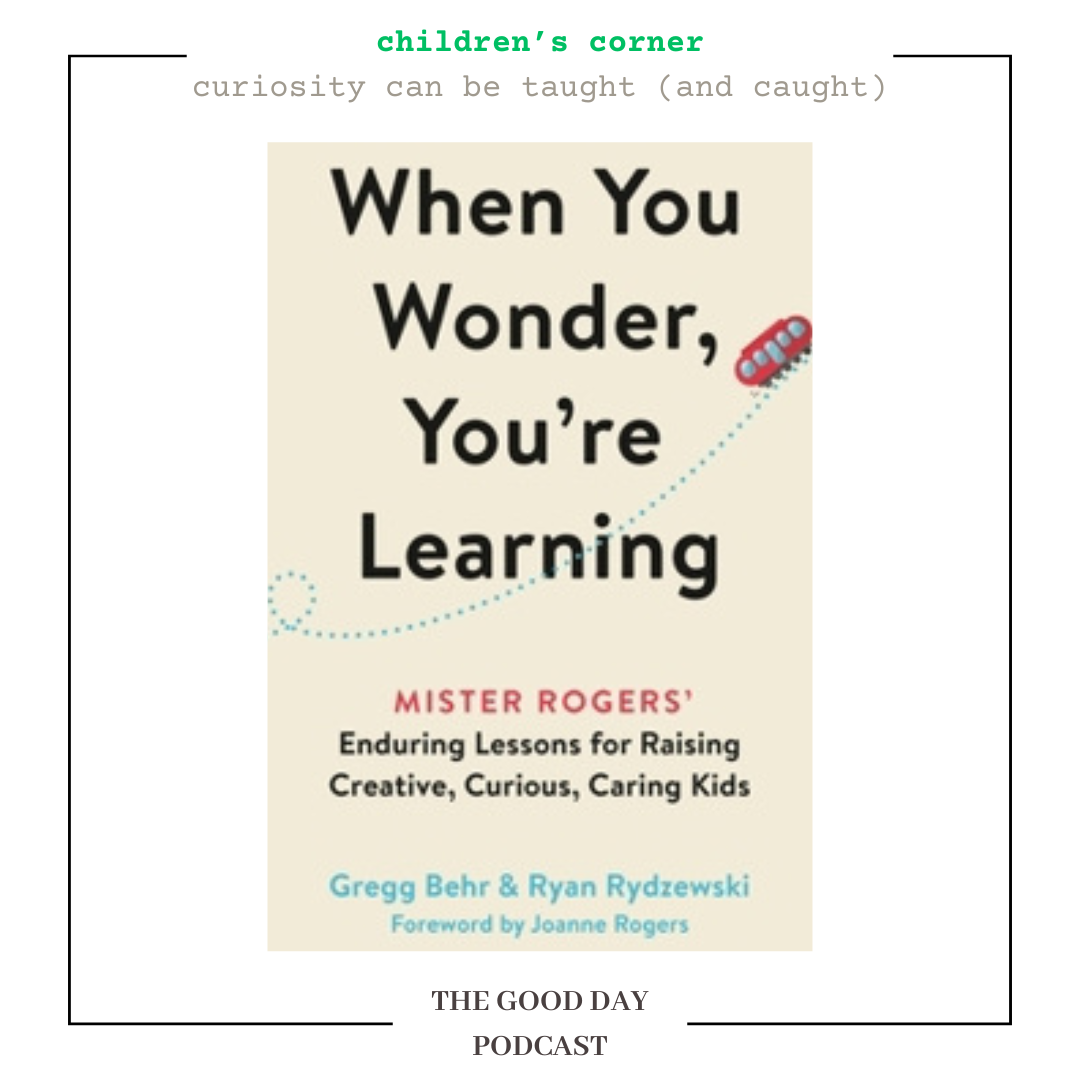
Excerpt from "When You Wonder, You're Learning: Mister Rogers' Enduring Lessons for Raising Creative, Curious, Caring Kids" by Gregg Behr and Ryan Rydzewski

If we want our children to become curious about God's Word and love God with all of their heart, mind and soul, the most important thing we can do is love God's Word and love God with all of our hearts, minds and souls in front of them. Read this excerpt about how Fred Rogers' intentionally cultivated curiosity in children on the Neighborhood to understand more why this is so.

...Margaret McFarland knew more than anyone in this world about families with young children," Erikson used to say. A child psychologist, educator, and professor in the Department of Psychiatry at the University of Pittsburgh's School of Medicine, Dr. Margaret McFarland taught kindergartners in Melbourne and college students in Massachusetts before returning to her hometown to help cofound Arsenal. It was there that one day a young man from the nearby theological seminary came knocking at her door.
The budding minister named Fred Rogers had decided that he wined so work with children through television. His teachers at the seminary, however, weren't entirely sure what to do with such a request Nothing like that had ever been fashioned from Presbyterian fabric," notes Maxwell King. Eventually a professor suggested that Rogers contact McFarland to study child development under her guidance.
The suggestion led to a lifelong friendship and professional collaboration that would eventually shape whole generations of kids. Rogers studied with McFarland for years at Arsenal: later, he'd meet each week to discus scrips and songs for the Neighborhood, As Roger's mentor, McFarland left an indelible mark on the program: "To know and love Fred Rogers," one journalist wrote, "is to know and love Margaret McFarland."
Rogers often said that one of the most profound lessons he learned from McFarland was the Quaker idea that attitudes are caught, not taught. He recalled how McFarland had once invited a famous sculptor to Arsenal: "Dr. McFarland said to him, 'I don't want you to teach sculpting. All want you to do is to love clay in front of the children." And that's what he did. He came once a week for a whole term, sat with the four- and four- and five-year-olds as they played, and he "loved" his clay in front of them." The directive worked. The adults who'd worked at Arsenal for years said that neither before nor since had the children there used clay so imaginatively, Rogers recalled. By simply delighting in his work, the sculptor had made children wonder about clay and what they might do with it themselves. They'd caught his curiosity.
Nearly every episode of the Neighborhood followed this lead in one way or another. Rogers introduced kids to diverse TV neighbors who were passionate about any number of crafts and occupations: There was Yo-Yo Ma loving the cello; Wynton Marsalis loving the trumper; Bill Nye loving science; Julia Child loving recipes; LeVar Burton loving books.
"The best teacher in the world is the one who loves what he or she does, and just loves it in front of you," he said, echoing McFarland."
...Not only did this experiment reinforce the importance of modeling and allowing curiosity, it suggested a powerful way to pique children's interest. Scientists have found that something irresistible happens when we mix the familiar (raisins and Skittles) with the unknown (what happens when they're dropped into liquid). lan Leslie notes that when people are presented with different landscape images, they tend to prefer those that include water, perhaps the most familiar substance on Earth. "But what's really interesting is that the most consistent and universal predictor of preference in these studies is mystery: scenes that hint at something we cannot see," he writes. "The reassuring presence of something we know is good for us gives us pleasure. But so does the promise of what lies beyond, the information we don't yet know."
In other words, we feel most curious when were aware of a gap between what we're familiar with and what we want to know. It's hard to feel curious about something we know absolutely nothing about."
Excerpt from "When You Wonder, You're Learning: Mister Rogers' Enduring Lessons for Raising Creative, Curious, Caring Kids" by Gregg Behr and Ryan Rydzewski
Reading cultivates curiosity. Let's be curious and intentionally choose to learn from people who have fruit present in their lives. In doing this, our strength builds and our joy is renewed. Making time to read uplifting stories offers peace that God is moving all around us, and we are able to rest in His truth and connection with others.
The good life, well it starts with a good day. Then another. Then another. Let's choose to live #TheGoodDay one day at a time.

Comments